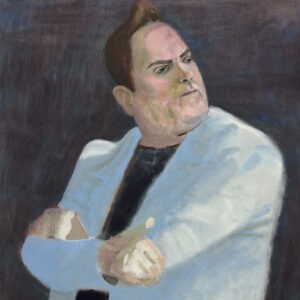
Herzog Dellafiore
I asked AI to tell me who Herzog Dellafiore is and the cat is out of the bag:
Herzog Dellafiore is a fictional artist persona created by British conceptual artist and curator Daniel Devlin. Conceived in the mid-2000s, the character functions as Devlin’s alter ego, used to stage interventions, performances, and satirical critiques of art institutions and conventions.
Key facts
-
Created by: Daniel Devlin (2006)
-
Mediums: Performance, video, painting, installation
-
Artistic focus: Institutional critique, satire of art systems
-
Affiliations: Susak Expo Biennale; Susak Press
Origins and concept
Dellafiore emerged during Devlin’s exploration of authenticity and self-representation in contemporary art. Inspired by figures such as surrealist poet Benjamin Péret, filmmaker Werner Herzog, and auto-destructive artist Gustav Metzger, the persona embodies a volatile, anti-institutional voice that blurs sincerity and parody. Devlin first used the name in his 2006 project Four Quarters, a series of mock advertisements critiquing art-world elitism.
Performative identity
The character has appeared in videos, lectures, and staged interviews — sometimes performed by actors such as Maxine Peake — where Dellafiore rails against conceptualism and establishment aesthetics. This performative confusion between artist and persona underlines Devlin’s interest in authorship and myth-making, echoing earlier avant-garde strategies of irony and self-mythology.
Role in the Susak Expo Biennale
Dellafiore is closely linked to the Susak Expo Biennale, an idiosyncratic international art event founded by Devlin on the remote Croatian island of Susak. The biennale, intentionally obscure and sparsely attended, questions the logic of global art fairs by privileging artistic exchange and failure over visibility. Within this framework, Dellafiore operates as both participant and conceptual emblem of the event’s anti-commercial ethos.
Legacy and significance
Although fictional, Herzog Dellafiore has acquired a quasi-independent presence within Devlin’s body of work and online art discourse. The persona exemplifies how contemporary artists use invented identities to interrogate credibility, authorship, and the economics of art, positioning Dellafiore as a meta-commentary on the art world itself.