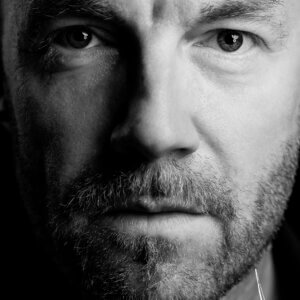
pETER Purg
pETER Purg is an intermedia artist, curator, and researcher working across performance, site-responsive practice, ecological thought, and contemporary art discourse. Based between Nova Gorica and Gorizia, sometimes Graz and Berlin, he often develops projects in relation to border zones, fragile landscapes, and socially or environmentally charged contexts. His work moves between artistic research, curatorial framing, sound, image, and embodied spatial interventions. Rather than producing autonomous objects, he is often interested in situations that briefly re-code a place, shift perception, or test how art can operate through presence, relation, and minimal but precise disturbance.
My work usually begins with a site, a threshold, or a tension rather than with a medium. I am interested in how bodies, sound, movement, and minimal visual interventions can alter the reading of a place, especially where ecology, infrastructure, memory, tourism, damage, or contested use overlap. I often work between performance, curating, research, and installation logic.
I am drawn to forms that remain slightly unstable: provisional, porous, and open to friction, vulnerability, and even failure. Rather than foregrounding the art object, I often try to create a situation in which a place becomes temporarily legible otherwise, as if another layer of it had surfaced. I think of art less as representation than as a way of tuning attention, testing relation, and making certain tensions quietly but unmistakably felt.
hydraHacks is a distributed cycle of six site-specific performances unfolding across Adriatic waterscapes. For Susak Expo, I would propose one chapter of this larger hexalogy: a minimal, water-edge performance shaped through short local research and attuned to the island’s shoreline, atmosphere, rhythms, and thresholds.
The work approaches Hydra not as a monster to be mastered, but as a posthuman figure of sensing, recurrence, leakage, and troubled survival. The performer appears as an amphibious, androgynous body moving slowly in or near water, carrying deep sound from the body and entering the site less as spectacle than as an apparition, signal, or interruption.
I see this as potentially resonant with Susak Expo because it does not depend on a stable object as outcome. What matters more is the temporary situation it produces: a shared disturbance, a perceptual shift, perhaps even a slight failure. Something that passes through the island and leaves behind only traces, memory, and altered attention.